
PERMITS AND INSPECTIONS
Walker City Hall
13600 Aydell Lane
Walker, LA 70785
Phone: 225.665.8893
Hours: 7:00 a.m. to 5:30 p.m.
Monday through Thursday
Floodplain Management Public Notice
As a public service, the City of Walker will provide you with the following information upon request:
- Whether a property is located in a Special Flood Hazard Area as shown on the current Flood Insurance Rate Map (FIRM) of the City of Walker.
- Additional flood insurance data for a site, such as the FIRM zone and the base flood elevation.
- We have a handout on the flood insurance purchase requirements that can help people who need a mortgage or loan for property in the Special Flood Zone Area.
- We will provide a copy of existing Elevation Certificate, LOMAs upon request on buildings constructed since December 15, 1991.
- We can give approximate flood depth, historic floods, localized flood issues, floodway ,wetlands, building permitting and property protection information.
For a flood zone determination request form, click here. Email your request to Lynette Richardson.
- Federal law requires that flood insurance policy be obtained as a condition of a federally backed mortgage or loan if the building is in a Special Flood Hazard Area (SFHA). Also flood insurance is available but not required in the un-shaded and shaded “X” Zone. We encourage everyone to have flood insurance.
- This determination is based on the Flood Insurance Rate Map for the City and location information provided by recipient or their representative. This letter does not imply that the referenced property will or will not be free from flooding or damage. A property not in Special Flood Hazard Area may be damaged by a flood greater than that predicted on the FIRM or from a local drainage problem not shown on the map. This letter does not create liability on the part of the City, or any officer or employee thereof, for any damage that results from reliance on this determination.
The following information is needed to supply your Flood Zone, BFE, and/or Map Panel Number:
1. Address of location. You must have the location of the structure marked on a map to be submitted with the flood zone determination request form.
2. Name of the person requesting the flood determination.
3. Contact information for the person requesting the flood determination.
For a brochure with important information about floodplain management, click here.
To contact the Building Official - Nancy Kimble
To contact the Certified Floodplain Manager - Lynette Richardson.
It is important to contact the Permit Department after any natural disaster: See this helpful VIDEO
FLOOD AWARENESS
USEFUL INFORMATION REGARDING FLOODING
click on image to enlarge
Build Responsible
Be Aware! All developments in the City of Walker needs local permits including substantial damage or substantial improvements of a structure. You can check out our Unified Development Codes (UDC) on our website or contact the City of Walker’s Permit Department at 225.665.8893 for advice before you build, fill, place a manufactured home or otherwise develop within City limits.
The zoning ordinance, flood control ordinance, and the International Building Codes have special provisions regulating the construction and other developments within floodplains. Without these provisions, flood insurance through the National Flood Insurance Program (NFIP) would not be available to property owners in the City of Walker. Any development in the floodplain without a permit is illegal; such activity may be reported to the City of Walker Permit Department.
Also Be Aware! Fill may not be placed on any property in a special flood hazard area, except under specific circumstances. This restriction on fill improves The City of Walker ability to handle flood events by maintaining the flood storage volume and also helps to reduce our flood insurance rates.
Insure your property from the flood hazard
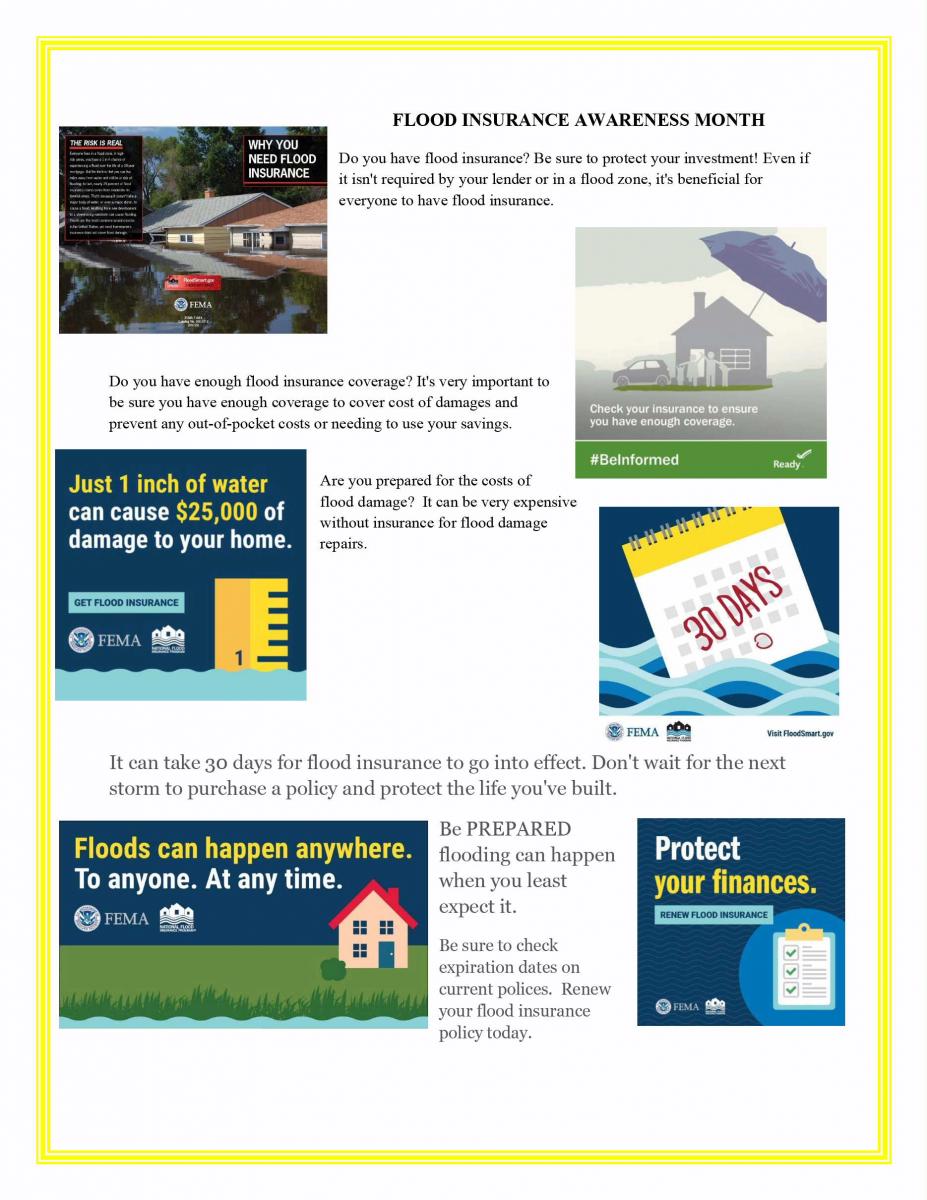
Remember even if the last flood missed you and your home has been flood proofed, the next flood could be worse. Even a small amount of water can cause significant damage.
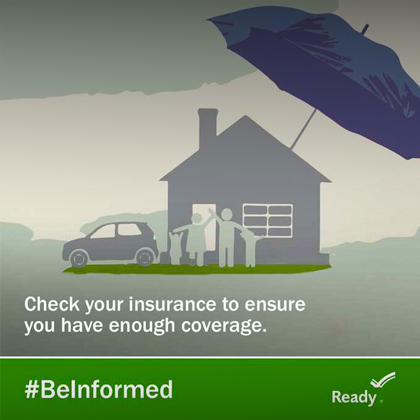
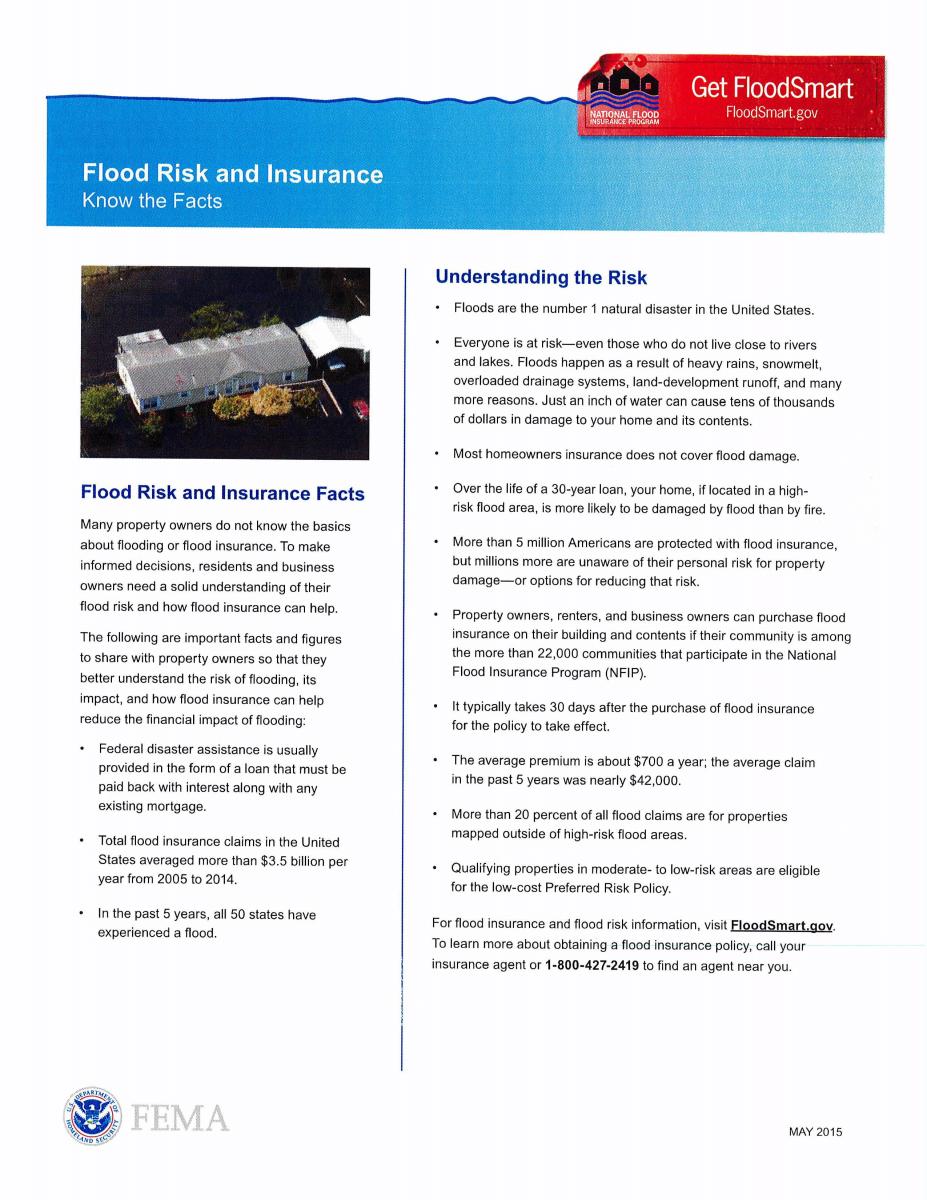
Flood Damage is Not covered by normal homeowners insurance. Everyone should purchase Flood Insurance even if you do not have a mortgage or live in a flood zone, it will protect your property and make recovery after a flood event easier.
Flood insurance is available to all in the City of Walker, even renters can buy content coverage cover for their belongings even if the owner of the building does not have structural coverage on the building.
To help our citizens with the cost of flood insurance, the City of Walker participates in the NFIP Community Rating System (CRS) program and is a class 7 rating which gives you a 15% discount on flood insurance. To find out more about flood insurance contact any licensed insurance agent. Don’t wait for the next flood; there is a 30-day waiting period for coverage to take effect. Keep in mind to be eligible for any FEMA Grants you must have NFIP insurance and not private flood insurance.
Three things you can do to check on flood insurance:
- Go to floodsmart.gov
- Contact your insurance agent
- Contact the City of Walker Floodplain Manager at 225-665-8893
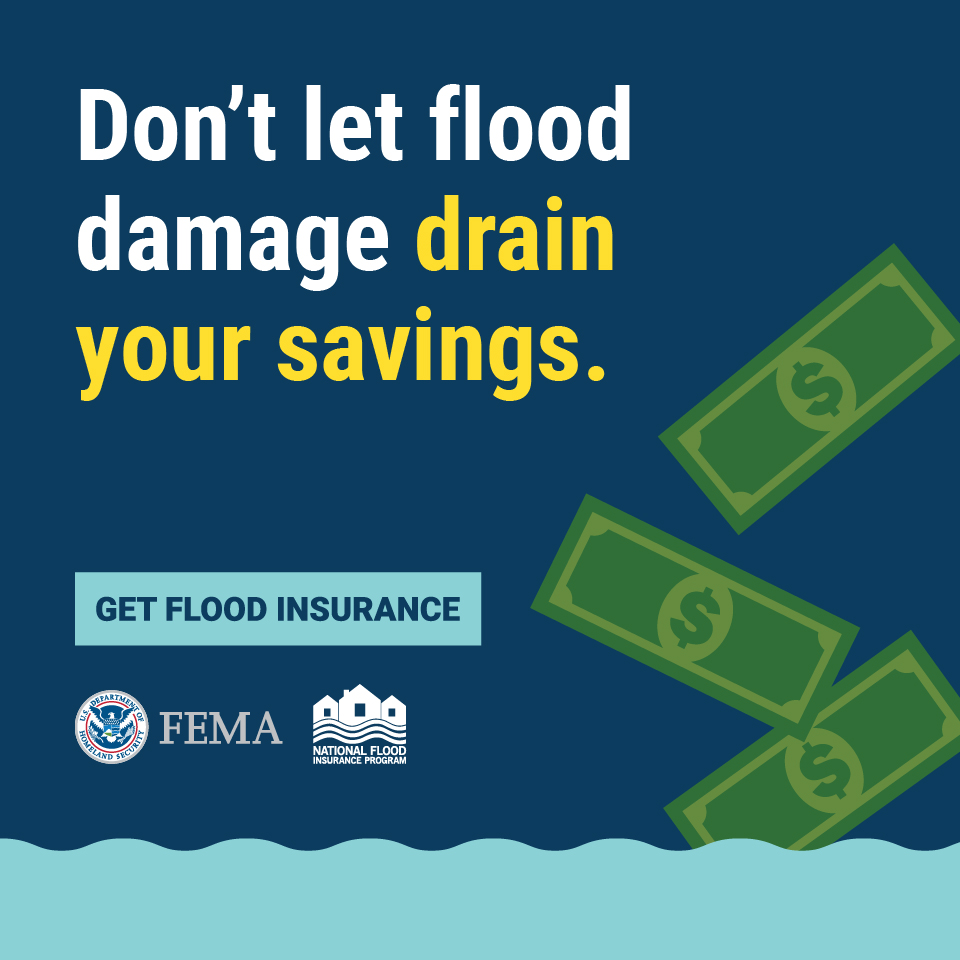
The cost of flood insurance is a drop in the bucket compared to the cost of flood damage. Ask your Insurance Agent to verify that your flood policy is correctly rated according to your home’s specific flood risk.
Know your flood hazard
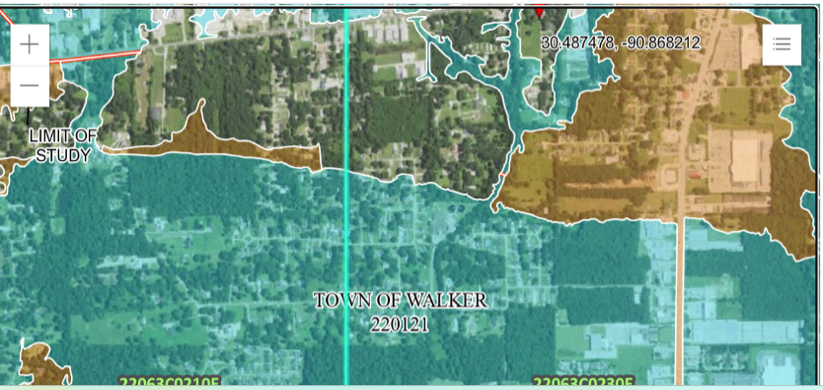
The City of Walker is dedicated to minimizing the loss of life and property that is associated with flooding and storm events. Education and prevention are valuable and proven tools that help communities become resistant to these natural disasters and the impact on flooding related to climate change and intensive rainstorms and extreme weather. The City of Walker recognizes that its entire community is susceptible to flooding, not just those located within Special Flood Hazard Areas (SFHA). Being aware of flooding can help you better prepare for and respond to storm events.
As floods in our area may occur during any season of the year and a large portion of our area is located in the FEMA Special Flood Hazard Area (SFHA); it is Very Important to Know your Flood Hazard. Flooding in our city is caused by three sources: backwater from West Coyell Creek, Taylor Bayou or flash flooding because of excessive rain in a short time frame. Major floods have occurred in our area in 1967, 1977, 1979, 1980,1983,1989,1992, 2001, 2005, and 2016..
Did you know...??? The term "100-year flood" is misleading; it does not mean that the flood will occur only once every 100 years. Rather, it is the flood that has a 1-percent chance of being equaled or exceeded each year. The 100-year flood could occur more than once in a short period of time or even within the same month.
Contact City of Walker Permit Office for more information about the specific conditions you may face. Elevation Certificates are available for newly constructed structures. 225.665.8893.
Flood Hazard Maps:
FEMA Flood Maps
AG Center Flood Maps
Protect Natural Floodplain Functions
Protecting natural floodplains prevents severe property damage, filters water pollution, and safeguards wildlife habitats by giving overflowing rivers a safe place to spread.
Why Natural Floodplains Matter
• Flood Control: They act like giant sponges that absorb excess water, slowing down fast currents and reducing downstream flood peaks.
• Water Quality: Plants and soils naturally filter out harmful nutrients, sediments, and chemical pollutants before the water reaches major reservoirs.
• Groundwater Recharge: Water slowly seeps into the ground here, replenishing underground aquifers used for drinking and farming.
• Wildlife Protection: Periodic flooding creates rich, diverse ecosystems that support fish, birds, and rare plants.
Ways to Protect and Restore Them
• Limit Development: Keep low-lying areas near rivers free from heavy concrete structures, parking lots, and housing additions.
• Plant Riparian Buffers: Re-establish native trees, shrubs, and grasses along riverbanks to stabilize soil and prevent erosion.
• Remove Artificial Barriers: Reconnect isolated river channels by pulling back obsolete levees or dikes where safe and practical.
• Do Not Dump Anything into ditches or Streams: Each item you dump contributes to flooding.
• Utilize Storm Water Protection/ Erosion Control when Building: Keeping building debris and pollution out of the storm drains allowing for better overall drainage in our area.
• Report Illegal Dumping activities or any development in these restricted areas: Contact the Department of Public Works if you see illegal activity. It can be reported to 225.665.2467.
• Never Dump Chemicals: Such as oil, paint, and pesticides into storm drains or canals, as it destroys plants, endangers wildlife, and contaminates water
Enjoying delicious seafood or engaging in outdoor activities like hunting or fishing are just a few of the many benefits of maintaining relatively undisturbed Natural Floodplains.
Protect Our Storm Drains
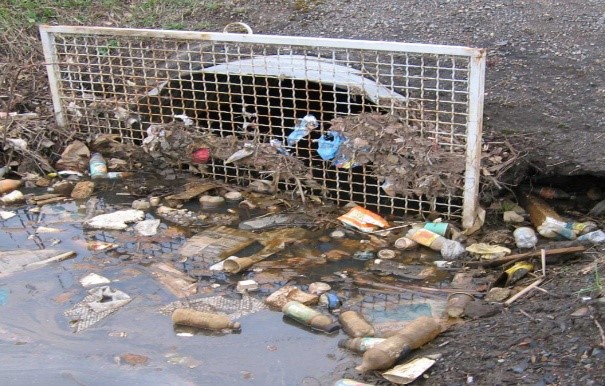
It is illegal in the City of Walker to dump any type of debris into a canal, stream, river, drainage ditches, or any other body of water within the City. This debris can become entangled in culverts, canals, or drainage ditches and impede drainage, causing the flow of water to back up. Citizens should also keep Storm drains on their property free of debris, including leaves and grass clippings that would impede the flow of water. Debris dumping should be reported to the City of Walker by calling the Department of Public Works at 225.665.2467.
Protect our storm drains! Dumping in storm drains leads to flooding. Keep storm drains free and clear of debris.
Protect your Property
Flooding causes more property damage than any other type of natural disaster. There are many ways to protect your home or business:
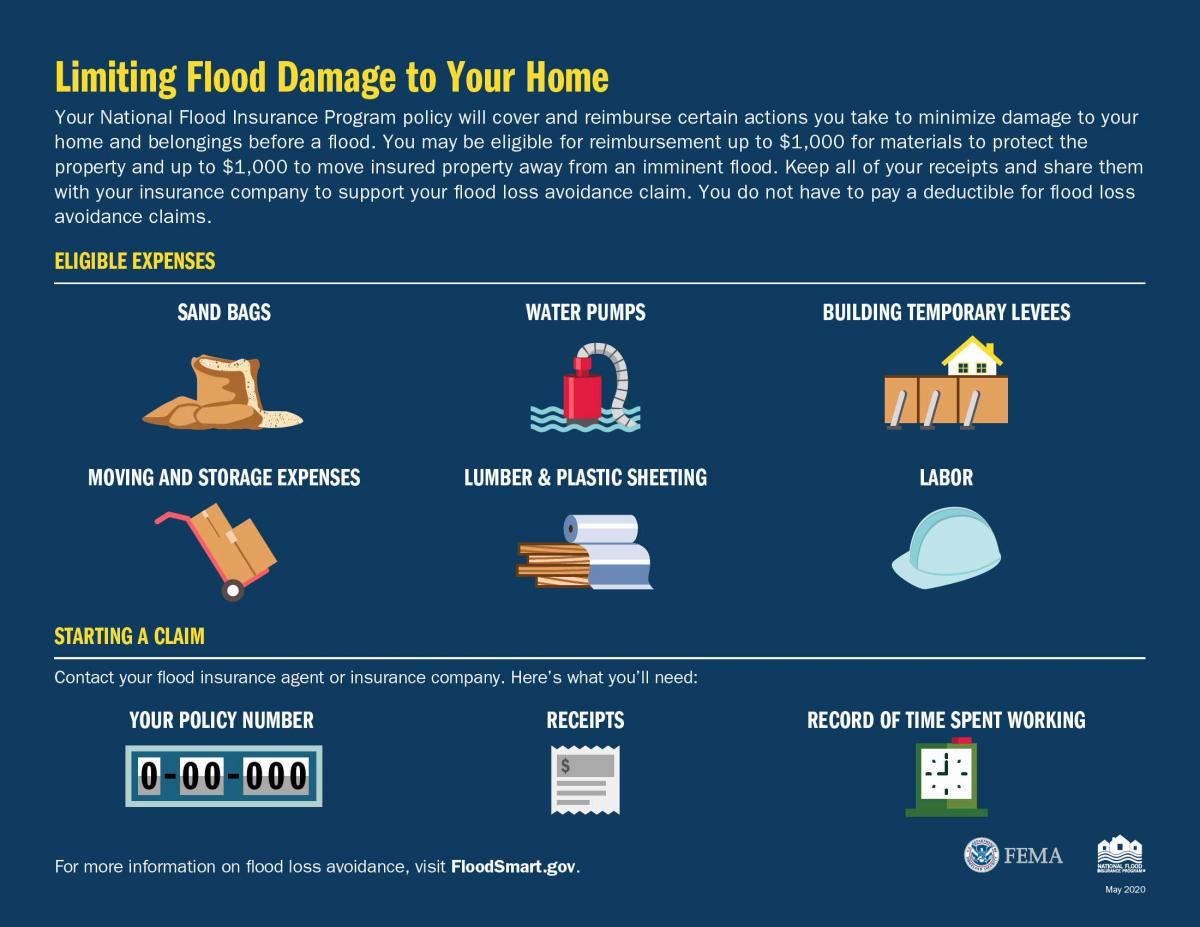
While Purchasing Flood Insurance helps you recover from a flood event, there are steps you can take to help lessen the damage prior to flooding. The City of Walker Building Department and Department of Public works will be familiar with the particular flooding conditions your area encounters and ways you can protect your property against them. If requested, the city will visit your property to review its flood problems and explain ways to prevent flood damage such as retrofitting techniques, help you with local drainage problems and give guidance on financial assistance programs. 225.665.8893
If a flood is forecast and there is time to safely do so, you could sandbag your property, close shutters or cover windows, turn off electrical circuits and gas lines that may come into contact with flood waters, and elevate your belongings.
Implement appropriate flood protection measures, such as marking the breaker box to show the circuits in floodable areas, correcting drainage problems, or elevating, floodproofing, or moving the building.
Use Flood resistant materials wherever possible.
Elevate: Place essential components above the flood level.
Retrofitting measures include:
• Elevating the building so that flood waters do not enter or reach any damageable portion of it.
• Constructing appropriate barriers out of fill or concrete between the building and flood waters.
• “Dry flood proofing” to make the building’s walls and floors watertight so water does not enter.
• “Wet flood proofing” to modify the structure and relocate the contents so that when flood waters enter the building there is little or no damage.
Review publications at the Library; search the catalog by keywords such as flood, coastal, elevated, and hazard.
Review FEMA’s “Homeowner’s Guide to Retrofitting: Six Ways to Protect Your Home From Flooding.”
Protecting People from Hazard
Stay Alert!
If flash flooding is imminent, the City of Walker residents are notified through local radio and cable television networks. Walker residents can also receive updated weather information from the National Weather Service Offices in Louisiana.
Be Safe
TURN AROUND, DON'T DROWN
Drowning is the #1 cause of flood deaths. Protect yourself and your loved ones.
When flood warnings are issued, you should take all necessary steps to protect you and your family.
•Be prepared to evacuate.
•Have an Evacuation Plan: know where you will go and how to get there before the emergency arises.
•Have all important documents readily available to take with you in the case of an evacuation.
•Do not walk through flood waters: A few inches of moving water can knock you off your feet.
•Do not drive through a flooded area: Do not drive around barriers, the road or bridge may be washed out.
•Stay away from power lines and electrical wires: Water and Electricity are a shocking combination. Electrocution is the second leading cause of death during a flood. Report downed power lines to the power company or city emergency management office. Turn off all electrical circuits and gas lines that may come in contact with flood water.
•Look out for animals, especially snakes. Small animals are running from flood waters just like you.
•Carbon monoxide exhaust kills: Use a generator or other gasoline-powered machine outdoors. Fumes from charcoal are especially deadly; cook with charcoal outdoors only.
•Be alert for gas leaks: Use a flashlight to inspect for damage. Don’t smoke or use candles, lanterns, or open flames.
Be Prepared
Make a plan for what your household, including your pets, will do in the event of a natural disaster such as a flood, hurricane, or tornado.
•Stay alert to bulletins that warn of flooding.
•Learn and practice evacuation routes, shelter plans, and flash flood response.
•Make a list of emergency numbers and identify a safe place to go.
•Know how to shut off the electricity and gas.
•Make an inventory of household contents.
•Keep important documents in a waterproof container.
•Gather supplies, including medicine, non-perishable foods, cleaning supplies, and water for several days, in case you must leave immediately or if services are cut off in your area.
•Stay tuned to your local weather station as a Hurricane approaches the Gulf Coast. Keep a battery powered radio handy and always have fresh batteries on hand.
•Hurricanes can cause major flooding. Prepare an evacuation plan and know how to get to higher ground.
•Prepare a “go bag” for severe emergencies and a “stay home kit” for sheltering in place..
•Include your pets in your emergency preparations by taking them with you when you evacuate, or by making necessary arrangements for them to shelter in place.
ONLINE RESOURCES
- Livingston Office of Homeland Security (LOHSEP)
- OFFICIAL SITE OF NFIP
- FEMA
- UNO FLOOD PORTAL
- RIVER STAGES
- LSU Ag Center Flood Map Portal
- LSU Ag Center
- Louisiana Homeowners Handbook to Prepare for Natural Hazards
- Sea Grant Flood Resources
- Amite River Basin Commission
- Hurricane Readiness
- Emergency Planning
- Livingston Parish Library
- National Weather Service
- Coastal Louisiana
- Insure your property
- Protect Our Storm Drains
- Build responsibly
- What is your flood hazard?
- Protect Natural Floodplain Functions
- Flood Preparedness
- FEMA Map Center
- Emergency Guide
- Livingston Parish Assessor Geo Portal
- CSRS 2016 inundation map
- Mitigation for Homeowners (FEMA)
Mayor Jimmy Watson's flood insurance promotion outreach
EMERGENCY CONTACT PHONE NUMBERS
| Livingston Parish Office of Emergency Preparedness | 225.686.3066 |
| Local Television Stations | |
| WBRZ Channel 2 | 225.387.2222 |
| WAFB Channel 9 | 225.383.9999 |
| WVLA Channel 33 | 225.766.3233 |
| WBTR Channel 19 | 225.928.3143 |
| All AM/FM Radio Stations | |
| NOAA Radio KHB46 | |
| National Weather Service | 225.357.9743 |
Hurricane Season: June 1 - November 30
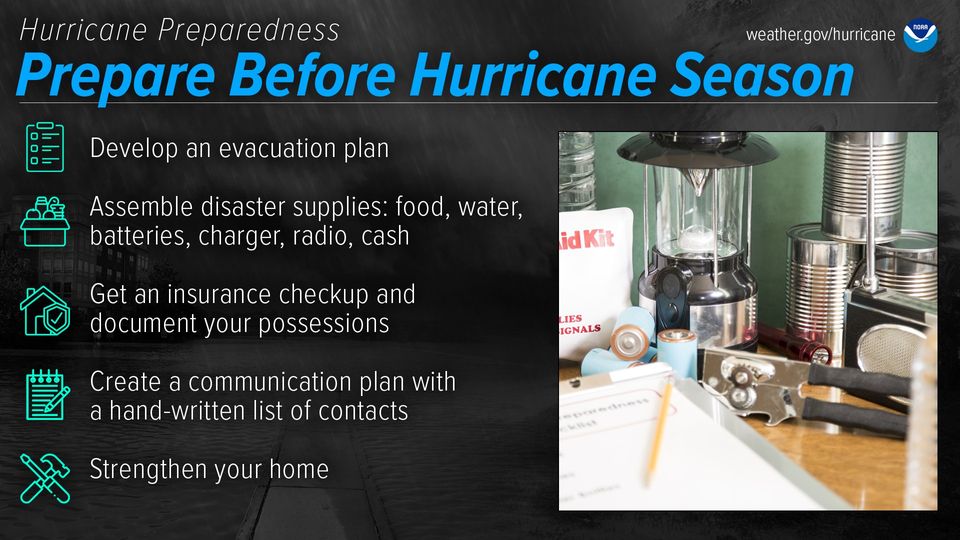
Check out the Ready.gov site for Hurricane Tips and other
disaster/emergency situations.
Plan Ahead for Disasters | Ready.gov